Tile Spacer & Trim Calculator
Spacers
Edge trim
Only edges that end in open air — not corners or wall abutments you'll caulk.
Spacers to buy
~110
- Approx. tile count
- ~100
- Spacers per tile
- 1
- Exposed edge
- 40 linear ft
- Trim pieces
- 6
Spacers are sold in bags of 100–500. Buy the bag size that covers you twice.
Save this calculation in the free app
Smart Tile Calculator keeps your tile jobs on your phone, offline. On iPhone? It's inside Roofing Calculator & Estimator.
Tools the pros use for this job
Tile Spacers

DGSL Tile Leveling System with Plier, 300 Tile Spacers 1/8" and 100 Wedges
$25.99
Check price on AmazonBuy two bags — spacers get lost, stepped on, and left in joints.
Edge Trim
Clean metal edges beat bullnose on price and modern looks.
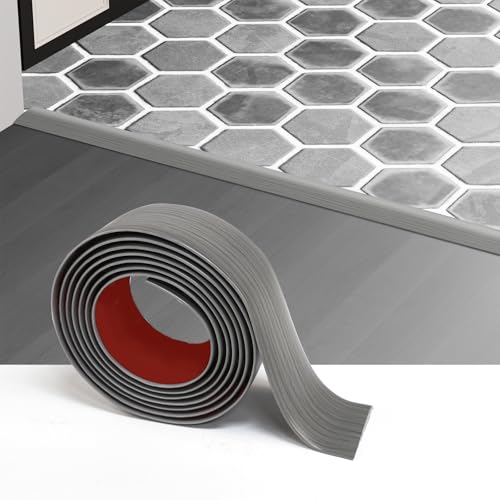
Transition Strips
Where tile meets wood or carpet, this hides the height change.

As an Amazon Associate I earn from qualifying purchases.
Prices as of Oct 10, 2026, 6:33 AM UTC. Product prices and availability are accurate as of the date/time indicated and are subject to change. Any price and availability information displayed on Amazon.com at the time of purchase will apply to the purchase of this product.
Everything else you need is on our tile tools page.
Do this math on the job site — in the free app
Smart Tile Calculator for Android: offline, in your pocket, free.
How this calculator works
In a grid layout each tile touches four 4-way intersections, but every intersection is shared by four tiles — so a grid needs about one cross spacer per tile. An offset/brick layout has T-junctions instead: each tile's end joint meets the long joints above and below it, so about two T-spacers per tile. If you stand tabs on edge (common on walls and with large tile), two per joint works out to about four per tile. We divide your area by the tile size, multiply, and add 10% for spacers that get dropped or stuck in the thinset.
Edge trim covers the perimeter where tile ends against a wall, doorway, or another floor — measure only the exposed edges. Trim comes in 8 ft or 10 ft sticks; we round up to whole pieces after adding 10% for miscuts on corners.
Frequently asked questions
What size spacer should I use?
1/16 in for rectified tile and a minimal look; 1/8 in for standard ceramic and most walls; 3/16 in or more for handmade-look tile and floors that need movement room. Match the spacer to the grout joint your tile requires.
Do I remove spacers before grouting?
Yes — pull them once the thinset has grabbed (usually a few hours, and always before grouting). Spacers left in the joint show through the grout as pale spots.
Metal trim or bullnose tile edges?
Metal (Schluter-style) trim is cheaper, slimmer, and more modern. Bullnose matches the tile exactly but costs 3–5× more per foot and limits you to whatever profiles the tile line offers.
Related calculators
- Tile Quantity CalculatorHow many tiles you need for any room, wall, or floor — with waste.
- Tile Layout & Pattern CalculatorCut sizes and row counts for grid, offset, diagonal, herringbone.
- Grout CalculatorPounds of grout by tile size, joint width, and thickness.
- Tile Leveling Clip CalculatorClips and reusable caps or wedges by tile size, spacing and layout.
- Tile Cost EstimatorTotal project cost: tile, grout, mortar, trim, and labor.
Guides worth reading next
- Tile Trim and Edging: Schluter, Bullnose, Pencil and MiterFour ways to finish a tile edge — metal L-profiles, bullnose, pencil trim and mitered corners — with cost, where each wins, and the install order.
- How to Measure a Room for Tile (Step by Step)Measure any room for floor or wall tile: handle closets and alcoves, convert inches to decimals, subtract fixtures, and add the right waste percentage.
- Choosing the Right Tile Size for Your RoomHow tile size changes a room: when 12×24 beats 4×4, why small rooms can take large tile, grout line math, and the flatness rule for big formats.