Self Leveler Calculator
Your floor
0 where the pour feathers out to nothing.
Measure the biggest gap under a long straightedge.
Bags of leveler (50 lb)
7–8
- Average depth
- 0.25 in
- Volume with waste
- 3.44 cu ft
- Coverage per bag at this depth
- 23–24 sq ft
- Primer
- 1 gal
Mix and pour continuously — SLU has about a 10-minute working time once mixed.
Save this calculation in the free app
Smart Tile Calculator keeps your tile jobs on your phone, offline. On iPhone? It's inside Roofing Calculator & Estimator.
Tools the pros use for this job
Self-Leveling Compound
Self-Leveling Compound
Top-rated SLU bags — check the max pour depth on the label.
Check price on AmazonTop-rated SLU bags — check the max pour depth on the label.
Mixing Paddle
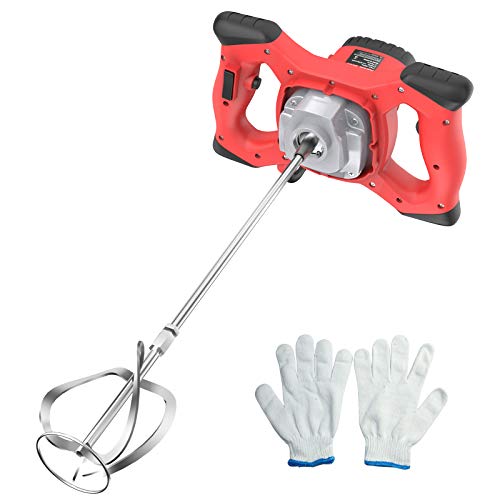
IMAYCC Cement Mixer, 2100W Electric Concrete Mixer with 6 Speed, 110V Handheld Mud Mixer for Motar,Paint, Grout, Plaster, Thinset,Fodder Stirring Tool
$48.99
Check price on AmazonSLU has a 10-minute pot life. You need a drill paddle, not a stick.
Uncoupling Membrane
Uncoupling Membrane
The layer on top that keeps slab movement away from your tile.
Check price on AmazonThe layer on top that keeps slab movement away from your tile.
As an Amazon Associate I earn from qualifying purchases.
Prices as of Oct 10, 2026, 6:33 AM UTC. Product prices and availability are accurate as of the date/time indicated and are subject to change. Any price and availability information displayed on Amazon.com at the time of purchase will apply to the purchase of this product.
Self-leveler coverage per 50 lb bag by depth
| Depth | Sq ft per bag | Bags for 100 sq ft (+10%) |
|---|---|---|
| 1/8 in | 46–48 | 3 |
| 1/4 in | 23–24 | 5 |
| 3/8 in | 15.3–16 | 7–8 |
| 1/2 in | 11.5–12 | 10 |
| 3/4 in | 7.7–8 | 14–15 |
| 1 in | 5.8–6 | 19–20 |
| 1 1/2 in | 3.8–4 | 28–29 |
Coverage is the manufacturer's published figure for CUSTOM LevelQuik RS and CustomTech TechLevel 150 (46–48 sq ft per 50 lb bag at 1/8 in, up to 1 1/2 in in one pour). Other brands are close; use the number on your bag if it differs.
Leveling the tile edges too? See our tile leveling system buying guide.
Do this math on the job site — in the free app
Smart Tile Calculator for Android: offline, in your pocket, free.
How this calculator works
A 50 lb bag of a cement-based self-leveler such as LevelQuik RS covers 46–48 sq ft at 1/8 inch — a yield of about 0.48–0.50 cubic feet — and coverage halves every time depth doubles. The calculator takes the shallowest and deepest points of the pour, averages them (a floor that runs from a featheredge to 1/2 in averages 1/4 in), works out the cubic feet, adds your waste allowance and divides by the bag yield. The lower bag count uses 48 sq ft per bag, the higher one 46.
Primer matters: unprimed concrete sucks the water out of SLU and it cracks. One gallon of primer covers about 350 sq ft. Pour the whole floor in one session — SLU self-welds only while wet, and a cold joint becomes a crack line under tile.
Frequently asked questions
How much self leveler do I need?
Multiply the area by the average depth in inches and divide by 12 for cubic feet, add about 10% for waste, then divide by the bag yield — about 0.48–0.50 cu ft for a 50 lb bag (46–48 sq ft at 1/8 in). 150 sq ft averaging 1/4 in is 3.4 cu ft with waste: 7–8 bags.
How many bags of self leveler for 100 square feet?
About 3 bags at 1/8 in, 5 at 1/4 in and 10 at 1/2 in, allowing 10% for waste, using 46–48 sq ft per 50 lb bag at 1/8 in.
How much concrete leveler do I need for 200 sq ft at 1/2 inch?
200 sq ft × 0.5 in ÷ 12 = 8.3 cu ft, or 9.2 cu ft with 10% waste. At 0.48–0.50 cu ft per 50 lb bag that is 19–20 bags — buy 20 and mix them back to back, because the whole floor has to be poured in one go.
How thick can I pour self-leveling compound?
LevelQuik RS and TechLevel 150 pour from a featheredge up to 1 1/2 inches in a single application; other products differ, and some need pea gravel added for deep fills. Check the bag — exceeding the rated depth causes cracking.
Can I use SLU over a wood subfloor?
Yes, with the right product: it must be rated for plywood, the floor must be rigid (screw down squeaks first), and you use metal lath or the manufacturer's primer system. Never pour standard SLU straight onto bare plywood.
How long before I can tile over it?
Most SLUs accept tile in 4–24 hours (check the bag). Moisture-sensitive tile like natural stone may need longer — test with a moisture meter on big pours.
Related calculators
- Thinset & Mortar CalculatorBags of thinset by trowel notch size and coverage.
- Floor Tile CalculatorTiles and boxes for any floor, by room dimensions and tile size.
- Large Format Tile Calculator24-inch-plus tiles: counts, leveling clips, and handling extras.
- Backer Board CalculatorCement board sheets, screws, and tape for floors and walls.
- Epoxy CalculatorGallons of epoxy resin for a pour or a floor coat, split by mix ratio.
Guides worth reading next
- Leveling a Floor for Tile: Flat vs Level, and How to Fix BothWhy tile needs flat (not level), the straightedge test, self-leveling compound basics, primers, and depth math that decides your bag count.
- Large-Format Tile: Is Your Floor Flat Enough?The 1/8-in-in-10-ft rule, why 15-inch tile changed the standards, how to test your slab with a straightedge, and what fixing it costs.
- How to Measure a Room for Tile (Step by Step)Measure any room for floor or wall tile: handle closets and alcoves, convert inches to decimals, subtract fixtures, and add the right waste percentage.