
Deck Mud Calculator for Shower Pans
Shower floor
Code range: 1/4 to 1/2 in per ft.
Bags of deck mud
3 bags
- Mortar volume
- 1.77 cu ft (1.95 with waste)
- Average thickness
- 1.42 in
- Thickness at the walls
- 1.63 in
- Rise over longest run
- 0.625 in over 2.5 ft
- Slope check
- Within 1/4–1/2 in per ft
Mix one bag at a time and pack it firm; deck mud should hold its shape when squeezed.
Tools the pros use for this job
Shower Pan Kit

VEVOR Shower Curb Kit, 38"x60" Watertight Shower Curb Overlay with 4" PVC Central Bonding Flange, 4" Stainless Steel Grate, 2 Cuttable Shower Curb and Trowel, Shower Pan Slope Sticks Fit for Bathroom
$171.90
Check price on AmazonKits include the drain, liner and slope guides that set the bed height.
Mixing Paddle
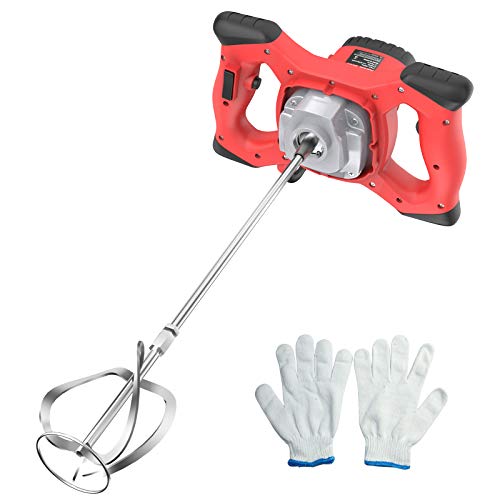
IMAYCC Cement Mixer, 2100W Electric Concrete Mixer with 6 Speed, 110V Handheld Mud Mixer for Motar,Paint, Grout, Plaster, Thinset,Fodder Stirring Tool
$51.90
Check price on AmazonDeck mud is mixed stiff; a paddle in a heavy drill saves your wrists.
Waterproofing

Hard-To-Find Fastener Phillips Self-Piercing Cement Board Screws, Durable Steel Hardware Fasteners for Home Improvement, DIY, Construction, 8 x 1-1/4, Pack of 157
$10.49
Check price on AmazonA bonded membrane goes over the cured bed before tile.
As an Amazon Associate I earn from qualifying purchases.
Prices as of Sep 30, 2026, 4:37 AM UTC. Product prices and availability are accurate as of the date/time indicated and are subject to change. Any price and availability information displayed on Amazon.com at the time of purchase will apply to the purchase of this product.
Do this math on the job site — in the free app
Smart Tile Calculator for Android: offline, in your pocket, free.
How this calculator works
Slope. Plumbing codes require a shower floor to fall at least 1/4 in per foot to the drain and not more than 1/2 in per foot (IRC P2709.1, IPC 417.5.2). The calculator warns if your slope is outside that range.
Centre drain. The bed is four sloped planes meeting at the drain with a level edge at the walls. The rise at the walls is the slope times the longest run from the drain to a wall, so every plane gets at least the minimum fall. Thickness grows in a straight line from the drain outward, and over the whole floor the extra depth averages two thirds of the rise, so volume = area × (drain thickness + 2/3 × rise).
Linear drain. The floor is one plane falling toward the drain wall, so the extra depth averages half the rise: volume = area × (drain thickness + 1/2 × rise).
Worked example. A 3 × 5 ft pan with a centre drain, 1 in of mud at the drain and 1/4 in per foot: the longest run is 2-1/2 ft, so the walls are 1-5/8 in thick. The average is 1 + 2/3 × 5/8 = 1.42 in, the volume 15 × 1.42 ÷ 12 = 1.77 cu ft, which is 3 bags at 0.66 cu ft each (the yield QUIKRETE lists for its 80 lb Sand/Topping Mix).
Frequently asked questions
How much deck mud do I need for a shower pan?
Multiply the floor area by the average bed thickness. For a centre drain that is the thickness at the drain plus two thirds of the rise to the walls; for a linear drain it is the drain thickness plus half the rise. A 3 × 5 ft pan at 1 in at the drain and 1/4 in per foot needs about 1.8 cu ft, three 80 lb bags of sand mix.
What slope does a shower pan need?
At least 1/4 in per foot toward the drain and no more than 1/2 in per foot, per IRC P2709.1 and IPC 417.5.2.
How many bags of sand mix per cubic foot?
Divide by the bag's yield. QUIKRETE lists about 0.66 cu ft for an 80 lb bag of Sand/Topping Mix; use the yield printed on your bag if you use a different product.
How thick should deck mud be at the drain?
Set it by your drain: the bed has to meet the drain flange or clamping ring at the height the drain maker specifies, and mortar and membrane makers publish minimum bed thicknesses. Enter that figure; the calculator adds the slope on top.
Related calculators
- Thinset & Mortar CalculatorBags of thinset by trowel notch size and coverage.
- Shower Tile CalculatorWalls, floor, curb, and niche for a full shower surround.
- Shower Niche Size CalculatorFinished and rough niche size that fits a stud bay and lines up with your tile.
- Backer Board CalculatorCement board sheets, screws, and tape for floors and walls.
- Self-Leveling Compound CalculatorBags of leveler by area and depth of the low spots.
Guides worth reading next
- How to Measure a Room for Tile (Step by Step)Measure any room for floor or wall tile: handle closets and alcoves, convert inches to decimals, subtract fixtures, and add the right waste percentage.
- Choosing the Right Tile Size for Your RoomHow tile size changes a room: when 12×24 beats 4×4, why small rooms can take large tile, grout line math, and the flatness rule for big formats.
- Sanded vs Unsanded vs Epoxy Grout: Which One Do You Need?Grout types explained by joint width and location: when sand scratches tile, why epoxy wins in showers, and how much of each type a bag actually covers.