Guide · 5 min read
Tile Trim and Edging: Schluter, Bullnose, Pencil and Miter
Four ways to finish a tile edge — metal L-profiles, bullnose, pencil trim and mitered corners — with cost, where each wins, and the install order.
Free calculator — runs in your browser, nothing is uploaded.
Why edges need a plan
Field tile has a factory edge meant to be buried in grout. Wherever tile ends — outside corners, the top of a wainscot, a niche opening, the edge of a floor — something has to finish that cut edge, and 'caulk it' is not a finish.
Choose the trim before you set the first tile, because metal profiles install with the tile, not after: the profile's anchoring leg goes under the tile's mortar bed as you reach the edge.
Metal profiles: the modern default
An L-shaped metal profile (Schluter is the famous brand; the profile shape is the generic idea) caps the cut edge with a clean metal line in aluminum, stainless, or color-coated finishes. It's durable, cheap per foot, and the contemporary standard.
Size the profile to the tile thickness plus mortar — a 3/8-inch tile usually pairs with a 3/8 or 1/2-inch profile. Mock up one edge before committing; a profile that's proud of the tile face looks wrong forever. To know how many 8 ft or 2.5 m sticks to order, total every exposed edge in the tile edge trim calculator.
Edge trim options
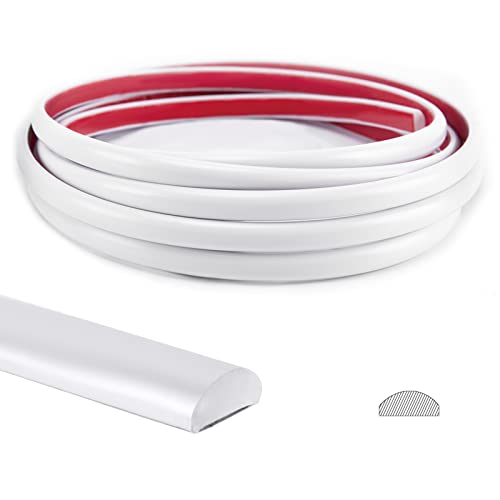
Art3d 25 ft Peel and Stick Tile Edge Trim, Backsplash Corner Decor, White
$21.99
Check price on Amazon


As an Amazon Associate I earn from qualifying purchases.
Prices as of Oct 10, 2026, 6:33 AM UTC. Product prices and availability are accurate as of the date/time indicated and are subject to change. Any price and availability information displayed on Amazon.com at the time of purchase will apply to the purchase of this product.
Bullnose, pencil and miter
Bullnose tile has one factory-rounded glazed edge and gives a soft, traditional finish — if your tile line offers it. Many porcelain lines don't, which is why metal profiles took over.
Pencil liner is a thin rounded trim that frames panels and niches. Mitering — cutting both edges at 45° to form a corner — is the high-end look on porcelain outside corners, but the mitered edge is fragile and needs a light sand and a steady hand.
Floor transitions
Where tile meets another floor, use a transition profile sized for the height difference: reducer strips to step down to vinyl or wood, T-molding to meet equal heights, and a metal edge where tile meets carpet.
Keep transitions out of the sightline of doorways when you can, and center them under the door slab when you can't — a transition should disappear when the door closes.
Do this math on the job site — in the free app
Smart Tile Calculator for Android: offline, in your pocket, free.
FAQ
Is metal edge trim better than bullnose?
Different, not better. Metal is more durable, more modern, and works with any tile. Bullnose looks softer and more traditional but only exists for tile lines that manufacture it.
When do I install the metal profile?
With the field tile, as you reach each edge — the profile's perforated leg embeds in the mortar bed under the last course of tile. It cannot be retrofitted cleanly.
How do I finish tile edges in a niche?
The cleanest options: mitered porcelain edges, matching pencil liner framing the opening, or slim metal profiles on all four sides. Choose before tiling — the niche frame sets your tile layout inside it.
Keep reading
- How to Tile a Kitchen Backsplash (Beginner-Friendly)
Start your backsplash on a level line off the counter, not the counter itself. Full beginner workflow: layout, outlets, mastic vs thinset, and grouting.
- Avoiding Lippage on Large-Format Tile
What causes one tile edge to sit higher than the next, the 1/8-in-in-10-ft flatness rule, why 50% offsets are banned on plank tile, and how leveling clips help.