Guide · 6 min read
How to Cut Tile: Snap Cutter, Wet Saw, Grinder and Nippers
Match the cut to the tool: straight rips on a snap cutter, L-cuts and notches on a wet saw, curves with nippers, and when a $10 scoring wheel is all you need.
Free calculator — runs in your browser, nothing is uploaded.
Snap cutter: 90% of your cuts
A manual snap cutter scores the glaze and breaks the tile along the line in one motion. For straight cuts on ceramic and most porcelain, it's faster than a wet saw — no water, no setup, no drying time — and the cut edge is factory-clean.
Its limits: tiles narrower than about 1 inch snap unpredictably, textured and glass tile can shatter, and it can't do notches or curves. For a standard floor with straight perimeter cuts, it may be the only saw you rent.
Wet saw: porcelain, stone and notches
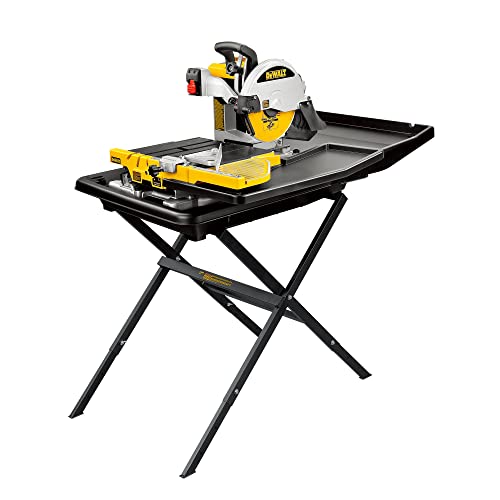
A wet saw's diamond blade, cooled by water, grinds through anything: hard porcelain, stone, glass, L-cuts around cabinets, and notches around door jambs. The water kills dust and keeps the blade alive.
Feed slowly and let the blade cut — forcing the tile chips the glaze at the exit edge. For visible edges, cut with the good face up and finish the last inch gently.
Cutting tools compared
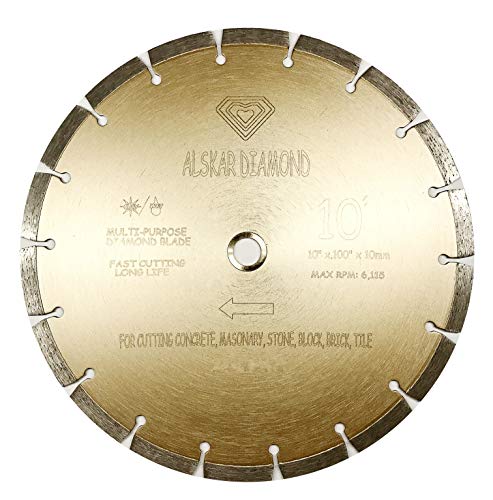
10 inch ALSKAR DIAMOND Dry or Wet Cutting General Purpose Power Saw Segmented Diamond Blades for Concrete Stone Brick Masonry (10")
$23.99
Check price on Amazon

As an Amazon Associate I earn from qualifying purchases.
Prices as of Oct 10, 2026, 6:33 AM UTC. Product prices and availability are accurate as of the date/time indicated and are subject to change. Any price and availability information displayed on Amazon.com at the time of purchase will apply to the purchase of this product.
Nippers, grinders and hole saws
Nipper pliers nibble curves and small irregularities a blade can't reach — think toilet flanges and radiator pipes. An angle grinder with a diamond blade handles freehand notches and dry cuts outdoors. Diamond hole saws drill clean circles for plumbing penetrations.
Rule of thumb: score-and-snap for straight, wet saw for hard or notched, nippers for curves, hole saw for round. Owning the wrong tool for a cut costs a tile; that math adds up fast on a full floor.
Cut clean, cut safe
Mark cuts on the tile face with a pencil or grease pencil, measure from the fixed wall (walls wander), and cut perimeter tiles individually — few walls are parallel enough to cut a whole row from one measurement.
Silica dust from dry cutting is genuinely dangerous: wet-cut when you can, wear a respirator when you can't, and always wear eye protection. Tile chips fly at snap-off, every single time.
Choosing the saw? See our tile saw buying guide.
Kitting out for the job? See the tile tools checklist.
Do this math on the job site — in the free app
Smart Tile Calculator for Android: offline, in your pocket, free.
FAQ
Do I need a wet saw for ceramic tile?
Not usually — a snap cutter handles straight cuts in ceramic beautifully. You only need the wet saw for notches, L-cuts, and tile too hard to snap cleanly.
Why does my tile keep breaking off the score line?
Usually an uneven score (press once, firmly, don't re-score), an uneven surface under the tile while snapping, or textured/tough porcelain that needs a wet saw instead.
Should I rent or buy a wet saw?
One bathroom: rent or borrow. A whole house of tile or multiple projects: an entry-level saw pays for itself in 2–3 rentals and is there at 9 pm when you need one more cut.
Keep reading
- Choosing the Right Tile Size for Your Room
How tile size changes a room: when 12×24 beats 4×4, why small rooms can take large tile, grout line math, and the flatness rule for big formats.
- The 7 Tile Mistakes That Show Up a Year Later
Skips that pass inspection on day one and fail by month twelve: no membrane, thin coverage, slivers at the doorway, wrong caulk, and more.