
Buying guide
Best Tile Saw: Wet Saw, Snap Cutter or Grinder?
Which cutting tool suits your tile size and material, the specs that matter for porcelain, and how many cuts your job involves.
As an Amazon Associate I earn from qualifying purchases. This guide is written from product specifications, industry standards and our calculators — it is not a hands-on product test. Affiliate disclosure
Most tile jobs need two cutting tools: a snap cutter for fast straight cuts and a wet saw (or a grinder) for notches, L-cuts and hard porcelain. The best tile saw for you depends mostly on tile size — a 7 in tabletop saw that is perfect for subway tile cannot rip a 24 × 48 in slab.
This guide compares the tools and uses our tile calculator to show how tile size changes the job. For technique, see how to cut tile.
Compared by type
Pros and cons describe each type from its specifications. The product in each row is a current, well-rated option of that type on Amazon, refreshed twice a day — check the listing's specifications against the “check” line before you buy.
Tabletop or stand wet saw
Best for: Porcelain, stone, notches and L-cuts
 QEP 22700Q 7 in. 700XT Wet Tile Saw with Table Extension$82.97View on Amazon →
Check: Rip capacity and diagonal cut length versus your largest tile
- Clean cuts in hard porcelain and stone
- Handles notches and bevels
- Water keeps dust down
- Messy — set it up outdoors or in a garage
- Small tabletop models limit tile size
- Blade quality makes a big difference
Handheld wet cutter
Best for: Cuts on installed tile and large tiles that will not fit a table
 POWERTEC 4.5" Handheld Tile Saw Kit with 1 Extra 4.5" X-Teeth Turbo Mesh Blade, 12A/1400W Wet/Dry Masonry Saw, 12,000 RPM, 7/8" Arbor, 0-45° Bevel, GFCI Plug & Water Feed System (HTS1045C)$147.99View on Amazon →
Check: Blade size and water feed
- Brings the saw to the tile
- Cuts any length with a straight edge
- Compact to store
- Harder to cut perfectly straight freehand
- Wet work on the job site
- Less precise than a table saw
Manual snap cutter
Best for: Fast straight cuts in ceramic and most porcelain
 VEVOR Manual Tile Cutter, 24 inch, Porcelain Ceramic Tile Cutter with Tungsten Carbide Cutting Wheel, Infrared Positioning, Anti-Skid Feet, Durable Rails for professional installers or beginners$61.99View on Amazon →
Check: Cutting length (buy longer than your tile's diagonal)
- Quiet, dust-free and fast
- No water or power
- Very clean edges on glazed tile
- Straight cuts only
- Struggles with very thick or textured tile
- Long models are bulky
Angle grinder with diamond blade
Best for: Notches, curves and cuts around pipes
 ZORUNNA 2Pcs 4.5" Diamond Blade for Angle Grinder, Tile Saw Blades$9.99View on Amazon →
Check: Blade rated for porcelain (continuous rim) and grinder size
- Cuts shapes nothing else can
- Works on installed tile
- Inexpensive if you own a grinder
- Dusty — dry cutting needs dust control and a respirator
- Rougher edges than a wet saw
- Kickback risk
Porcelain diamond blade
Best for: Upgrading any wet saw for chip-free porcelain cuts
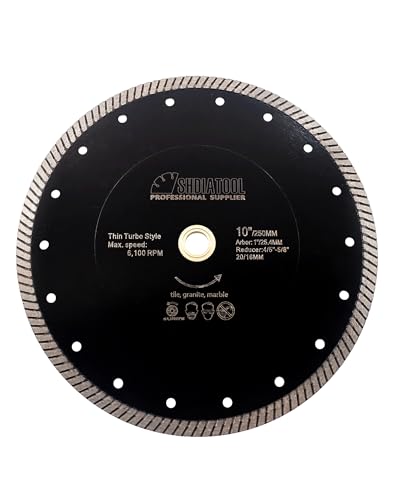 SHDIATOOL Diamond Turbo Blade 10 - Inch Super Thin Cutting Disc for Porcelain Ceramic Tile Granite Dia 250mm$39.99View on Amazon →
Check: Diameter and arbor size to match your saw
- Biggest single upgrade to cut quality
- Continuous rim reduces chipping
- Lasts many projects
- A good blade costs a meaningful share of a budget saw
- Wrong arbor size will not fit
- Dulls faster on stone
| Type | Current option | Pros | Cons |
|---|---|---|---|
| Tabletop or stand wet sawBest for: Porcelain, stone, notches and L-cutsCheck: Rip capacity and diagonal cut length versus your largest tile | QEP 22700Q 7 in. 700XT Wet Tile Saw with Table Extension$82.97View on Amazon → |
|
|
| Handheld wet cutterBest for: Cuts on installed tile and large tiles that will not fit a tableCheck: Blade size and water feed | POWERTEC 4.5" Handheld Tile Saw Kit with 1 Extra 4.5" X-Teeth Turbo Mesh Blade, 12A/1400W Wet/Dry Masonry Saw, 12,000 RPM, 7/8" Arbor, 0-45° Bevel, GFCI Plug & Water Feed System (HTS1045C)$147.99View on Amazon → |
|
|
| Manual snap cutterBest for: Fast straight cuts in ceramic and most porcelainCheck: Cutting length (buy longer than your tile's diagonal) | VEVOR Manual Tile Cutter, 24 inch, Porcelain Ceramic Tile Cutter with Tungsten Carbide Cutting Wheel, Infrared Positioning, Anti-Skid Feet, Durable Rails for professional installers or beginners$61.99View on Amazon → |
|
|
| Angle grinder with diamond bladeBest for: Notches, curves and cuts around pipesCheck: Blade rated for porcelain (continuous rim) and grinder size | ZORUNNA 2Pcs 4.5" Diamond Blade for Angle Grinder, Tile Saw Blades$9.99View on Amazon → |
|
|
| Porcelain diamond bladeBest for: Upgrading any wet saw for chip-free porcelain cutsCheck: Diameter and arbor size to match your saw | SHDIATOOL Diamond Turbo Blade 10 - Inch Super Thin Cutting Disc for Porcelain Ceramic Tile Granite Dia 250mm$39.99View on Amazon → |
|
|
Prices as of Sep 27, 2026, 9:00 PM UTC. Product prices and availability are accurate as of the date/time indicated and are subject to change. Any price and availability information displayed on Amazon.com at the time of purchase will apply to the purchase of this product.
How tile size changes the tool
Count the tiles and look at the size of the largest: that sets the cut length your saw needs. The tile calculator runs the count; the example uses the same function.
Worked example: A 120 sq ft floor, 12% waste for an offset layout
- 12 × 24 in tile: 68 tiles — rip cuts up to 24 in, diagonal about 27 in
- 24 × 48 in tile: 17 tiles — rip cuts up to 48 in, diagonal about 54 in
68 tiles of 12 × 24 suit a 7 in saw with a 24 in+ rip plus a 24 in snap cutter; 17 tiles of 24 × 48 need a long rail cutter or a handheld wet cutter with a guide.
Laying large-format tile? Check the floor with the large-format tile calculator and read avoiding lippage on large-format tile.
What to look for on the listing
- Rip capacity and diagonal capacity — compare with your largest tile, not the average.
- Blade size and type: continuous-rim diamond blades cut porcelain with the least chipping.
- Motor power and a sliding table or rail for straight, repeatable cuts.
- Water containment — splash guards and a good tray keep the mess manageable.
- Bevel and plunge cuts if you plan mitred edges or outlet cut-outs.
Which tool for which tile
| Tile | Main tool | Backup tool |
|---|---|---|
| Subway and small ceramic | Snap cutter | Tile nippers or a small wet saw |
| Porcelain up to 12 × 24 | Wet saw or snap cutter | Grinder for notches |
| Large format (24 × 48 and up) | Long rail cutter or track wet saw | Handheld wet cutter |
| Natural stone | Wet saw | Grinder with stone blade |
| Mosaic sheets | Nippers or snap cutter | Wet saw for full rows |
Shop the types above
As an Amazon Associate I earn from qualifying purchases.
QEP 22700Q 7 in. 700XT Wet Tile Saw with Table Extension
$82.97
View on Amazon →POWERTEC 4.5" Handheld Tile Saw Kit with 1 Extra 4.5" X-Teeth Turbo Mesh Blade, 12A/1400W Wet/Dry Masonry Saw, 12,000 RPM, 7/8" Arbor, 0-45° Bevel, GFCI Plug & Water Feed System (HTS1045C)
$147.99
View on Amazon →VEVOR Manual Tile Cutter, 24 inch, Porcelain Ceramic Tile Cutter with Tungsten Carbide Cutting Wheel, Infrared Positioning, Anti-Skid Feet, Durable Rails for professional installers or beginners
$61.99
View on Amazon →ZORUNNA 2Pcs 4.5" Diamond Blade for Angle Grinder, Tile Saw Blades
$9.99
View on Amazon →SHDIATOOL Diamond Turbo Blade 10 - Inch Super Thin Cutting Disc for Porcelain Ceramic Tile Granite Dia 250mm
$39.99
View on Amazon →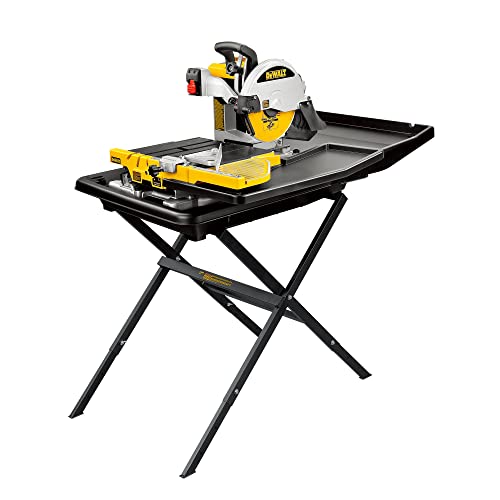
DEWALT Wet Tile Saw with Stand, 10-Inch, Corded (D24000S)
$999.00
View on Amazon →Prices as of Sep 27, 2026, 9:00 PM UTC. Product prices and availability are accurate as of the date/time indicated and are subject to change. Any price and availability information displayed on Amazon.com at the time of purchase will apply to the purchase of this product.
Safety notes
- Wear eye protection, hearing protection and, for any dry cutting, a respirator rated for silica dust — cutting tile releases crystalline silica.
- Plug wet saws into a GFCI outlet and keep the cord and connections dry.
- Keep hands clear of the blade path; use a push block for small pieces and let the blade stop before reaching in.
- Never use a cracked or wobbling blade, and match its speed rating to the saw.
Frequently asked questions
What is the best saw for cutting porcelain tile?
A wet saw with a continuous-rim porcelain diamond blade gives the cleanest cuts. A good snap cutter handles most straight cuts in porcelain too.
Do I need a wet saw or is a snap cutter enough?
A snap cutter covers straight cuts on most ceramic and porcelain. You still need a wet saw or grinder for notches, L-cuts and thick or textured tile.
What size tile saw do I need?
One whose rip and diagonal capacity exceed your largest tile. A 7 inch tabletop saw suits tile up to about 12 × 24; large-format tile needs a longer rail or a handheld cutter with a guide.
Can I cut tile with an angle grinder?
Yes, with a diamond blade rated for tile. It is ideal for notches and curves, but it is dusty and rougher than a wet saw, so wear a respirator and eye protection.
Should I rent or buy a tile saw?
Renting suits a single large-format job. For a few bathrooms or ongoing projects, a mid-range wet saw with a good blade usually pays for itself.