Buying guide
Best Grout Tools: Float, Sponge, Paddle and Haze Remover
The tools that decide whether grout joints come out full, smooth and haze-free, what to check before buying, and how much grout to mix.
As an Amazon Associate I earn from qualifying purchases. This guide is written from product specifications, industry standards and our calculators — it is not a hands-on product test. Affiliate disclosure
Grouting is a short job with a narrow window: the grout is mixed, packed into the joints, cleaned off the tile faces and shaped before it stiffens. The right float packs joints full without scratching glazed tile, a proper grout sponge lifts residue without pulling grout out of the joints, and a paddle mixes a consistent batch without whipping in air.
Below, each tool is compared by the job it does and the spec to check. The quantities come from our grout calculator, and the technique is in how to grout tile.
Compared by type
Pros and cons describe each type from its specifications. The product in each row is a current, well-rated option of that type on Amazon, refreshed twice a day — check the listing's specifications against the “check” line before you buy.
Rubber grout float
Best for: Packing grout into joints and striking off the excess
 QEP 4 in. x 9.5 in. Molded Rubber Grout Float with Non-Stick Gum Rubber, Black$10.97Check price on Amazon
Check: A firm gum-rubber pad for cement grout, or a hard epoxy float for epoxy grout
- Forces grout to the full depth of the joint
- Rubber will not scratch most glazed tile
- Cheap and long-lasting with cleaning
- Soft pads drag grout out of wide joints
- Pads wear and round off with use
- A standard float is too stiff for epoxy cleanup
Grout sponge and wash bucket
Best for: Cleaning residue off tile faces and shaping the joints
 QEP 70005Q-6D 7.5 Inch x 5.5 Inch x 1.875 Inch Grouting, Cleaning and Washing Sponge, X-Large, 6-Pack$8.97Check price on Amazon
Check: A dense hydrophilic sponge with rounded edges; a bucket with a roller or divider
- Dense sponge cleans without pulling grout from the joints
- Rounded edges shape joints evenly
- Clean-rinse bucket keeps the water clearer
- Too much water weakens and lightens the grout
- Sponges wear quickly on rough tile
- Needs frequent rinsing water changes
Mixing paddle for a drill
Best for: Mixing a consistent batch of grout or thinset
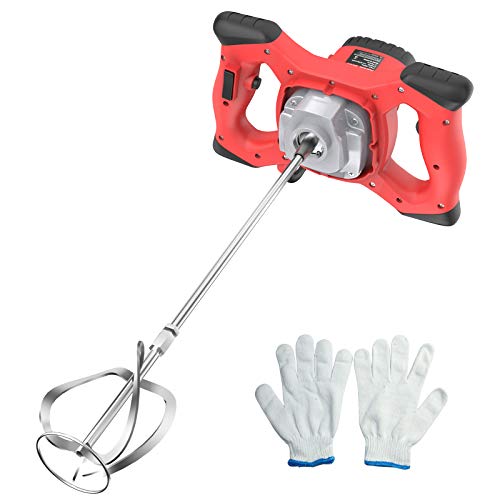 IMAYCC Cement Mixer, 2100W Electric Concrete Mixer with 6 Speed, 110V Handheld Mud Mixer for Motar,Paint, Grout, Plaster, Thinset,Fodder Stirring Tool$51.90Check price on Amazon
Check: Paddle shape for grout (low-speed, non-whipping) and shaft size for your drill
- Mixes evenly with no dry lumps
- Faster and more consistent than hand mixing
- Same paddle works for thinset
- High drill speed whips air into the grout
- Too big for a small batch of grout
- Needs a drill with enough torque
Grout haze remover
Best for: Removing the cement film left on tile after grouting
See options on AmazonCheck: That it is safe for your tile (acid-free for natural stone) and how long after grouting it can be used
- Removes haze a sponge cannot
- Restores the tile's finish
- One bottle covers a typical room
- Acidic types etch marble, limestone and travertine
- Used too early it attacks fresh grout
- Needs thorough rinsing
Color-matched caulk
Best for: Corners and changes of plane where grout cracks
 Gorilla 100% Silicone Waterproof Caulk, All-Purpose, White, 10 oz Cartridge$9.84Check price on Amazon
Check: A color matched to your grout line and a sanded or unsanded texture to suit
- Flexible where walls meet floors and tubs
- Matches the grout color
- Stops the cracking that grout gets in corners
- Shorter life than grout — recaulk every few years
- Hard to tool neatly in long runs
- Must go on clean, dry joints
| Type | Current option | Pros | Cons |
|---|---|---|---|
| Rubber grout floatBest for: Packing grout into joints and striking off the excessCheck: A firm gum-rubber pad for cement grout, or a hard epoxy float for epoxy grout | QEP 4 in. x 9.5 in. Molded Rubber Grout Float with Non-Stick Gum Rubber, Black$10.97Check price on Amazon |
|
|
| Grout sponge and wash bucketBest for: Cleaning residue off tile faces and shaping the jointsCheck: A dense hydrophilic sponge with rounded edges; a bucket with a roller or divider | QEP 70005Q-6D 7.5 Inch x 5.5 Inch x 1.875 Inch Grouting, Cleaning and Washing Sponge, X-Large, 6-Pack$8.97Check price on Amazon |
|
|
| Mixing paddle for a drillBest for: Mixing a consistent batch of grout or thinsetCheck: Paddle shape for grout (low-speed, non-whipping) and shaft size for your drill | IMAYCC Cement Mixer, 2100W Electric Concrete Mixer with 6 Speed, 110V Handheld Mud Mixer for Motar,Paint, Grout, Plaster, Thinset,Fodder Stirring Tool$51.90Check price on Amazon |
|
|
| Grout haze removerBest for: Removing the cement film left on tile after groutingCheck: That it is safe for your tile (acid-free for natural stone) and how long after grouting it can be used | See options on Amazon |
|
|
| Color-matched caulkBest for: Corners and changes of plane where grout cracksCheck: A color matched to your grout line and a sanded or unsanded texture to suit | Gorilla 100% Silicone Waterproof Caulk, All-Purpose, White, 10 oz Cartridge$9.84Check price on Amazon |
|
|
Prices as of Oct 3, 2026, 4:38 AM UTC. Product prices and availability are accurate as of the date/time indicated and are subject to change. Any price and availability information displayed on Amazon.com at the time of purchase will apply to the purchase of this product.
How much grout to mix
Grout quantity depends on the joint width and the tile size and thickness, not just the area. The numbers below come from the grout calculator function for 100 sq ft with full-depth joints.
Worked example: 100 sq ft of tile, three common layouts
- 12 × 12 in tile, 3/8 in thick, 1/8 in joints, sanded: 7.1 lb → 1 bag of 25 lb
- 12 × 24 in tile, 3/8 in thick, 3/16 in joints, sanded: 7.9 lb → 1 bag of 25 lb
- 2 × 2 in mosaic, 1/4 in thick, 1/8 in joints, unsanded: 23.8 lb → 3 bags of 10 lb
Mosaics take several times the grout of large tile: 23.8 lb against 7.1 lb for the same area.
Mix only what you can place and clean in about 20 to 30 minutes, or less on a hot day. Epoxy grout has its own epoxy grout calculator.
Which tool for which grout
| Grout | Float | Cleanup |
|---|---|---|
| Sanded cement grout (joints 1/8 in and wider) | Firm gum-rubber float | Dense grout sponge, then a dry buff once it hazes |
| Unsanded cement grout (joints under 1/8 in) | Softer rubber float | Sponge lightly — thin joints wash out easily |
| Epoxy grout | Hard epoxy float | The maker's cleanup pads and solution, working fast |
| Premixed (urethane or acrylic) grout | Rubber float | Sponge per the label, usually with little water |
| Natural stone tile | Rubber float | Acid-free haze remover only; seal the stone first if the maker says so |
Sealing once it cures? See our grout sealer buying guide. Replacing old grout? The regrout cost calculator prices it.
Safety notes
- Wear gloves: cement grout is alkaline and can burn skin with prolonged contact.
- Wear a dust mask when pouring and mixing powdered grout, and mix in a ventilated space.
- Wear eye protection when mixing with a drill paddle; grout can splash.
Frequently asked questions
What is the best grout float?
A firm gum-rubber float for sanded and unsanded cement grout, and a hard epoxy float for epoxy grout. Replace the pad when its edges round off, because a worn float leaves joints underfilled.
What sponge is best for grouting?
A dense, rounded-edge grout sponge, wrung out until it is just damp. Too much water lightens the grout color and weakens the joints.
How do I remove grout haze?
Buff with a dry cloth once the grout has firmed, and use a grout haze remover suited to your tile for any film left after the grout cures. Never use acidic cleaners on marble, limestone or travertine.
How much grout do I need for 100 sq ft?
It depends on tile size and joint width: about 7.1 lb for 12 × 12 in tile with 1/8 in joints, but 23.8 lb for a 2 × 2 in mosaic. The grout calculator works it out for your tile.
Should I use grout or caulk in corners?
Caulk. Corners and changes of plane move slightly, which cracks rigid grout. Use a caulk color-matched to your grout.