Tile & Grout Sealer Calculator
Your surface
Applied with a small brush or wheel to joints only.
Natural stone: 2 minimum. Slate: expect 3.
Sealer to buy
0.3 qt
- Coverage per quart
- ~400 sq ft
- Coats
- 1
- 24 oz bottles
- 1
- 1-quart bottles
- 1
Buy the next bottle size up — running dry mid-coat leaves a visible tide line.
Do this math on the job site — in the free app
Smart Tile Calculator for Android: offline, in your pocket, no ads. iPhone version coming soon.
Tools the pros use for this job
Grout Sealer

AQUA-X 16 Oz. Grout Sealer, Clear Grout and Tile Sealer, Natural Finish, Professional Grade, Indoor & Outdoor, Fast Dry and Long Lasting Protection
Check price on AmazonThe top-rated penetrating sealer for grout and stone.
Applicator Kit
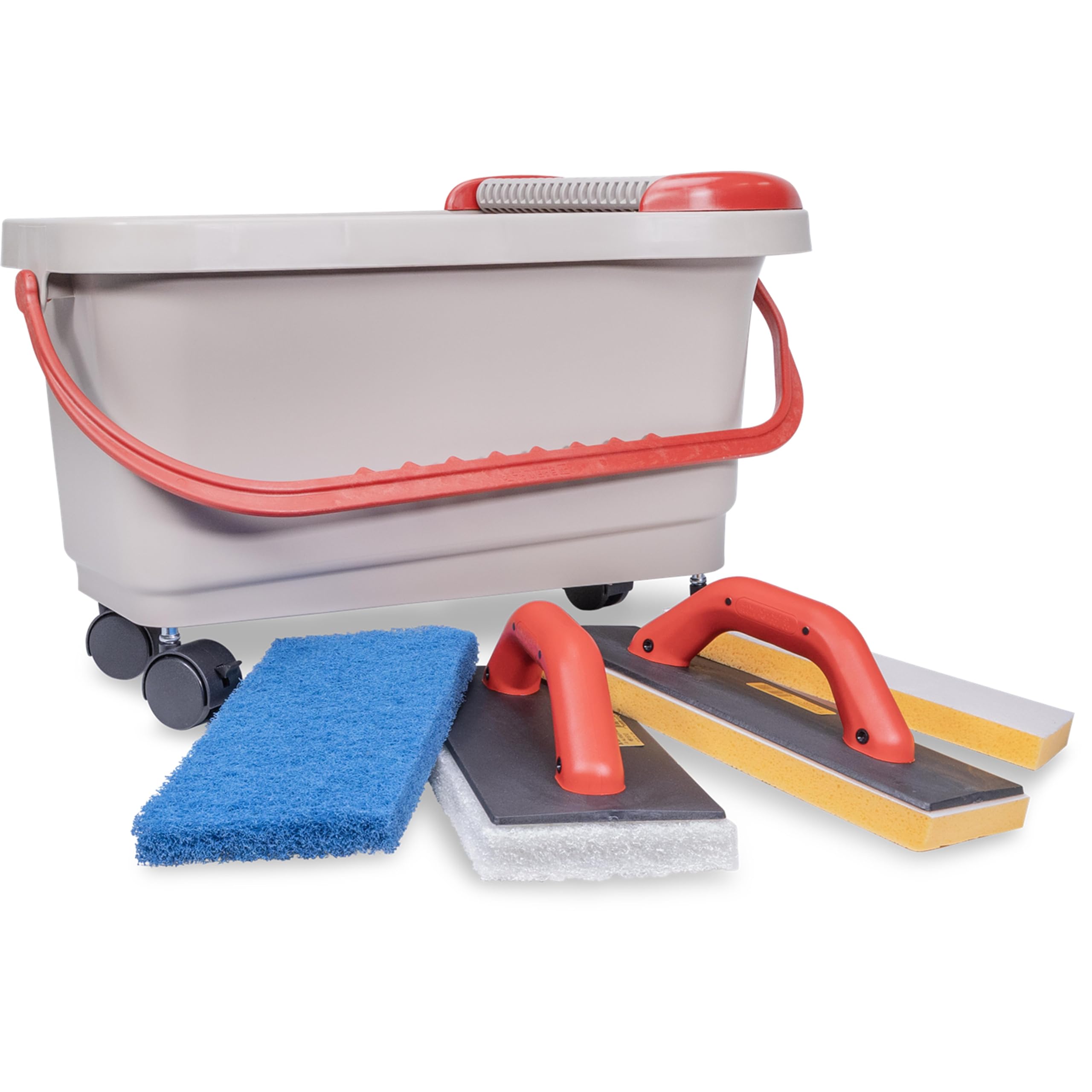
BARWALT Ultra Tile Grouting System, Grout Bucket Kit, Assembled in the USA | Grate and Slotted Sponge Sift Grout, Cuts Grouting Time Nearly in Half, Includes Wall and Floor Sponge, BWT81584
Check price on AmazonA sealer wheel beats a brush for straight grout lines.
Grout Brush

Sponsored Ad - 2 Pack Grout Scrub Brush with Stiff Bristles | Small Cleaning Brush for Kitchen, Bathroom, Tile Floors, Gaps, Crevices and Window Tracks with Durable Scrubbing Bristles
Check price on AmazonSealer over dirty grout seals the dirt in. Scrub first.
Paid links — we may earn a commission at no extra cost to you.
How this calculator works
Sealer coverage depends entirely on porosity. Glazed tile needs none on the face — only the grout. Unglazed and natural stone need the whole surface done, and coverage per quart drops from ~400 sq ft (grout lines only) to ~100 sq ft (slate).
Second coats go further because the surface is already partly sealed — we estimate each extra coat at 75% of the first coat's consumption. Always follow the bottle's own coverage figure when it differs; formulations vary widely.
Frequently asked questions
Does glazed porcelain or ceramic tile need sealing?
No — the glaze is already waterproof. Only the cement grout lines need sealer. The exception is polished porcelain, which has microscopic pores opened by polishing and benefits from one coat.
How soon after grouting can I seal?
Most cement grouts need 48–72 hours to cure before sealing; some fast-setting grouts allow 24 hours. Sealing too early traps moisture and turns grout blotchy. Epoxy grout never needs sealer.
How often should I re-seal?
Test yearly: drip water on the grout. If it beads, you are fine; if it darkens and soaks in, re-seal. Showers typically need it every 1–2 years, floors every 2–3.
Related calculators
- Grout CalculatorPounds of grout by tile size, joint width, and thickness.
- Shower Tile CalculatorWalls, floor, curb, and niche for a full shower surround.
- Patio & Outdoor Tile CalculatorOutdoor-rated tile, mortar, and drainage gaps for patios.
- Tile Cost EstimatorTotal project cost: tile, grout, mortar, trim, and labor.
Guides worth reading next
- How to Seal Grout and Tile (and What Never Needs Sealing)Penetrating vs topical sealers, the water-drop test to know if you need it, sealing porcelain (no), sealing natural stone (yes), and the re-seal calendar.
- Natural Stone vs Porcelain That Looks Like StoneMarble, travertine and slate vs stone-look porcelain: sealing schedules, etching, slip resistance, cost over 10 years, and where each belongs.
- How to Measure a Room for Tile (Step by Step)Measure any room for floor or wall tile: handle closets and alcoves, convert inches to decimals, subtract fixtures, and add the right waste percentage.